
ISO 14001:2026 – A Major Step Toward Sustainable Environmental Management
ISO 14001 คือมาตรฐานระบบการจัดการสิ่งแวดล้อม (Environmental Management System: EMS) ที่ได้รับการยอมรับในระดับสากล นับตั้งแต่เปิดตัวครั้งแรกในปี 2539 (ค.ศ. 1996) มาตรฐานนี้ได้รับการทบทวนและปรับปรุงอย่างต่อเนื่องเพื่อให้องค์กรสามารถบริหารประเด็นสิ่งแวดล้อมได้อย่างเป็น
ระบบและสอดคล้องกับบริบทโลกที่เปลี่ยนแปลงไป
ISO 14001:2026 ได้รับการประกาศใช้ในเดือนเมษายน 2569 (ค.ศ. 2026) ในชื่อ “Environmental management systems – Requirements with guidance for use” โดยเป็นฉบับที่ 4 ซึ่งแทนที่ ISO 14001:2015 และ Amendment 1:2024 การปรับปรุงครั้งนี้ยังคงเจตนารมณ์เดิมของมาตรฐาน แต่ทำให้ข้อกำหนดชัดเจนขึ้น ใช้งานง่ายขึ้น และเชื่อมโยงกับผลลัพธ์ด้านสิ่งแวดล้อมที่วัดได้มากขึ้น
การปรับปรุงครั้งนี้ไม่ใช่การรื้อระบบเดิม (Revolution) แต่เป็นการยกระดับอย่างเป็นระบบ (Evolution) เพื่อผสาน EMS เข้ากับกลยุทธ์ทางธุรกิจ การบริหารความเสี่ยง และการขับเคลื่อนความยั่งยืนในระยะยาว โดยเฉพาะประเด็นสำคัญระดับโลก ได้แก่ การเปลี่ยนแปลงสภาพภูมิอากาศ (Climate Change) ความหลากหลายทางชีวภาพ (Biodiversity) การใช้ทรัพยากรอย่างมีประสิทธิภาพ และเศรษฐกิจหมุนเวียน (Circular Economy)
เจาะลึก 5 ประเด็นการเปลี่ยนแปลงในข้อกำหนดหลัก
ISO 14001:2026 ปรับปรุงข้อกำหนดเพื่อให้สอดคล้องกับโครงสร้างร่วมของมาตรฐานระบบการจัดการ (Harmonized Structure) และความคาดหวังของผู้ใช้มาตรฐานทั่วโลก โดยมีประเด็นที่องค์กรควรให้ความสำคัญ 5 เรื่อง ดังนี้
1. การบูรณาการโครงสร้างร่วมและการปรับคำศัพท์ (Harmonized Structure & Terminology)
มาตรฐานฉบับใหม่ปรับโครงสร้างและถ้อยคำให้สอดคล้องกับแนวทางร่วมของมาตรฐานระบบการจัดการ ทำให้องค์กรที่ดำเนินระบบหลายมาตรฐาน เช่น ISO 9001, ISO 45001 หรือ ISO 50001 สามารถบูรณาการระบบได้ง่ายขึ้น ลดความซ้ำซ้อนของเอกสาร และใช้กระบวนการร่วมกันได้อย่างมีประสิทธิภาพ
- ปรับถ้อยคำให้ชัดเจนและสอดคล้องกับมาตรฐานระบบการจัดการฉบับใหม่ โดยเฉพาะคำที่เกี่ยวกับพันธสัญญาที่ต้องปฏิบัติตาม (Compliance obligations)
- แยกความหมายของ “results” และ “outcomes” ให้เห็นความแตกต่างระหว่างผลลัพธ์ของกิจกรรมหรือกระบวนการเฉพาะ กับผลสัมฤทธิ์ในภาพรวมของ EMS
- ทำให้การเชื่อมโยงระหว่างบริบทองค์กร ความเสี่ยง โอกาส วัตถุประสงค์ และผลการดำเนินงานด้านสิ่งแวดล้อมมีความชัดเจนขึ้น
2. การเน้นมุมมองวงจรชีวิตผลิตภัณฑ์ (Life Cycle Perspective: LCP)
Life Cycle Perspective ยังคงเป็นหัวใจสำคัญของ ISO 14001 แต่ในฉบับปี 2026 มีการเน้นให้พิจารณามุมมองวงจรชีวิตตั้งแต่การทำความเข้าใจบริบทองค์กร การกำหนดขอบเขต EMS และการวางแผนด้านสิ่งแวดล้อม ไม่ใช่จำกัดอยู่เฉพาะขั้นตอนการประเมินประเด็นปัญหาสิ่งแวดล้อมเท่านั้น
องค์กรจึงควรมองผลกระทบด้านสิ่งแวดล้อมตั้งแต่ต้นน้ำจนถึงปลายน้ำ เช่น การได้มาซึ่งวัตถุดิบ การออกแบบผลิตภัณฑ์ การผลิต การขนส่ง การใช้งาน การบำรุงรักษา การนำกลับมาใช้ใหม่ การรีไซเคิล และการกำจัดหลังสิ้นสุดอายุการใช้งาน
- ช่วยให้องค์กรมองเห็นผลกระทบที่เกิดนอกพื้นที่ปฏิบัติงานโดยตรง แต่ยังอยู่ในห่วงโซ่คุณค่าที่องค์กรมีอิทธิพลหรือควบคุมได้
- สนับสนุนการลดของเสีย การใช้ทรัพยากรอย่างมีประสิทธิภาพ และการออกแบบกระบวนการที่เป็นมิตรต่อสิ่งแวดล้อม
- เชื่อมโยงกับการจัดซื้อสีเขียว การคัดเลือกผู้ส่งมอบ และการสื่อสารข้อกำหนดด้านสิ่งแวดล้อมไปยังคู่ค้า
3. การขยายภาวะผู้นำสู่การมีส่วนร่วมจริงของคนในองค์กร (Leadership & Active Engagement)
ISO 14001:2026 ให้ความสำคัญกับบทบาทของผู้บริหารระดับสูงในการขับเคลื่อน EMS ให้เป็นส่วนหนึ่งของการบริหารองค์กร ไม่ใช่เป็นภาระของทีมสิ่งแวดล้อมหรือผู้แทนฝ่ายบริหารเพียงกลุ่มเดียว
ผู้บริหารควรแสดงภาวะผู้นำผ่านการกำหนดทิศทาง สนับสนุนทรัพยากร สร้างความตระหนักรู้ และผลักดันให้บุคลากรทุกระดับ โดยเฉพาะระดับปฏิบัติการ มีส่วนร่วมในการจัดการสิ่งแวดล้อมในงานจริง
- ทำให้ EMS เชื่อมโยงกับวัตถุประสงค์เชิงกลยุทธ์ขององค์กรและการตัดสินใจทางธุรกิจ
- ยกระดับบทบาทของพนักงานหน้างาน (Shop floor) ในการควบคุมผลกระทบด้านสิ่งแวดล้อม
- สร้างวัฒนธรรมองค์กรที่มองเรื่องสิ่งแวดล้อมเป็นความรับผิดชอบร่วมกัน ไม่ใช่เพียงข้อกำหนดเพื่อการตรวจประเมิน
4. การจัดการการเปลี่ยนแปลงอย่างเป็นระบบ (Clause 6.3 Management of Change)
ข้อกำหนดใหม่เรื่อง Management of Change ทำให้องค์กรต้องมีวิธีการที่เป็นระบบในการควบคุมการเปลี่ยนแปลงที่อาจส่งผลต่อ EMS เช่น การเปลี่ยนเครื่องจักร วัตถุดิบ กระบวนการผลิต เทคโนโลยี โครงสร้างองค์กร ผู้รับเหมา หรือรูปแบบการปฏิบัติงาน
สาระสำคัญคือองค์กรควรประเมินและควบคุมผลกระทบด้านสิ่งแวดล้อม “ก่อน ระหว่าง และหลัง” การเปลี่ยนแปลง เพื่อป้องกันผลกระทบที่ไม่คาดคิด และทำให้การเปลี่ยนแปลงสอดคล้องกับวัตถุประสงค์ด้านสิ่งแวดล้อม
- Pre-change Assessment: ประเมินประเด็นปัญหาสิ่งแวดล้อม ความเสี่ยง โอกาส และพันธสัญญาที่เกี่ยวข้องก่อนอนุมัติการเปลี่ยนแปลง
- Operational Control during Transition: กำหนดและคงไว้ซึ่งมาตรการควบคุมระหว่างการเปลี่ยนผ่าน รวมถึงการสื่อสารและการกำกับดูแลผู้เกี่ยวข้อง
- Post-change Review: ทบทวนผลลัพธ์หลังการเปลี่ยนแปลง โดยใช้หลักฐานเชิงประจักษ์เพื่อยืนยันว่ามาตรการควบคุมมีประสิทธิผล
องค์กรสามารถบูรณาการข้อกำหนดนี้เข้ากับระบบ Change Management ที่มีอยู่ใน ISO 9001, ISO 45001 หรือระบบบริหารความเสี่ยงขององค์กรได้ เพื่อลดความซ้ำซ้อนของเอกสารและเพิ่มประสิทธิภาพในการควบคุมการเปลี่ยนแปลง
5. การยกระดับการควบคุมห่วงโซ่คุณค่าและผู้ให้บริการภายนอก (Value Chain & External Providers)
ISO 14001:2026 ยกระดับการควบคุมการดำเนินงานให้ครอบคลุมกระบวนการ ผลิตภัณฑ์ และบริการที่จัดหาจากภายนอกมากขึ้น จากเดิมที่องค์กรอาจมุ่งเน้นเฉพาะกระบวนการที่จ้างเหมาภายนอก (Outsourced processes) ไปสู่การพิจารณาผลกระทบด้านสิ่งแวดล้อมตลอดห่วงโซ่คุณค่า
องค์กรจึงควรกำหนดเกณฑ์และมาตรการควบคุมด้านสิ่งแวดล้อมสำหรับผู้ส่งมอบ คู่ค้า ผู้รับเหมา และผู้ให้บริการภายนอก โดยพิจารณาตามระดับอิทธิพลและการควบคุมที่องค์กรมี รวมถึงความเสี่ยงและโอกาสที่เกี่ยวข้อง
- กำหนดข้อกำหนดด้านสิ่งแวดล้อมในการจัดซื้อ จัดจ้าง และคัดเลือกผู้ส่งมอบ
- สื่อสารข้อกำหนดและมาตรการควบคุมไปยังคู่ค้าและผู้รับเหมาที่เกี่ยวข้อง
- ติดตามผลการดำเนินงานด้านสิ่งแวดล้อมของผู้ให้บริการภายนอกอย่างเหมาะสมตามระดับความเสี่ยง
- ใช้ Green Procurement Criteria หรือ Supplier Environmental Evaluation เป็นเครื่องมือสนับสนุนการควบคุม
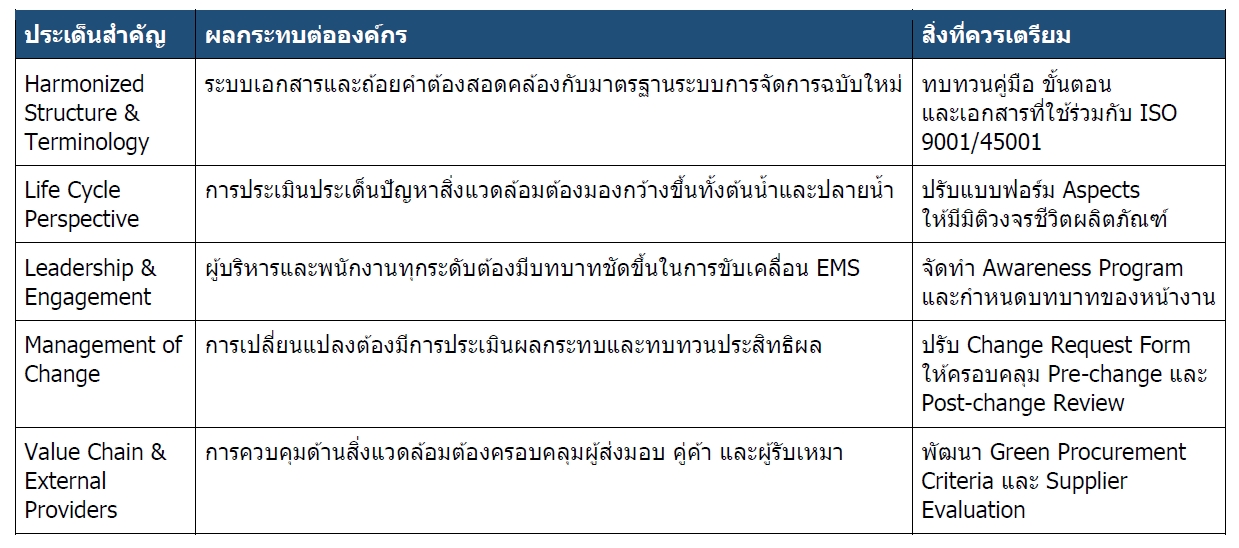
ตารางสรุปผลกระทบต่อองค์กร
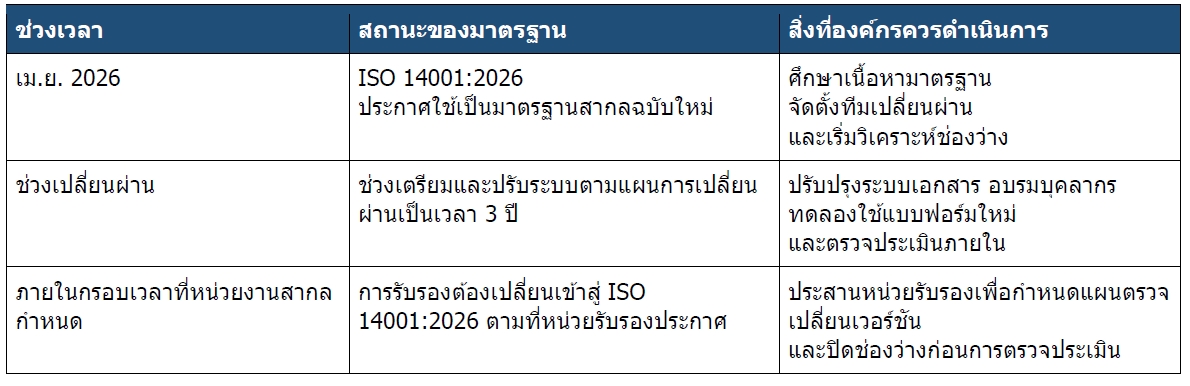
กรอบเวลาการเปลี่ยนผ่านระบบ (Transition Timeline)
ระยะเวลาและแนวทางในการเปลี่ยนผ่านสำหรับองค์กรที่ได้รับการรับรอง ISO 14001:2015 สามารถติดตามได้จากหน่วยรับรองใช้บริการอยู่
แนวทางการเตรียมความพร้อมสำหรับองค์กร
สำหรับองค์กรที่ต้องการเตรียมระบบ ไม่ว่าจะเป็นองค์กรที่เริ่มต้นใหม่หรือองค์กรที่ได้รับการรับรอง ISO 14001:2015 อยู่แล้ว ทีมงานหลัก (Core Team) ควรดำเนินการตามแนวทางต่อไปนี้
- ทำ Gap Analysis โดยเปรียบเทียบ EMS ปัจจุบันกับข้อกำหนด ISO 14001:2026 โดยเน้น Life Cycle Perspective, Management of Change และการควบคุมผู้ให้บริการภายนอก
- จัดทำ Transition Roadmap ที่ระบุโครงการหลัก ผู้รับผิดชอบ ระยะเวลา งบประมาณ เครื่องมือ และตัวชี้วัดความสำเร็จ (KPIs) อย่างชัดเจน
- ปรับปรุงแบบฟอร์มประเมินประเด็นปัญหาสิ่งแวดล้อม (Environmental Aspects) ให้ครอบคลุมมุมมองวงจรชีวิตผลิตภัณฑ์ ตั้งแต่ต้นน้ำถึงปลายน้ำ
- ปรับปรุง Change Request Form ให้ครอบคลุมการประเมินผลกระทบก่อนการเปลี่ยนแปลง การควบคุมระหว่างเปลี่ยนผ่าน และการทบทวนประสิทธิผลหลังการเปลี่ยนแปลง
- จัดทำหรือปรับปรุง Green Procurement Criteria และ Supplier Environmental Evaluation เพื่อควบคุมผลกระทบด้านสิ่งแวดล้อมจากภายนอกองค์กร
- สร้างความพร้อมภายในองค์กรด้วยการอบรมและสื่อสารให้พนักงานทุกระดับเข้าใจบทบาทของตนใน EMS โดยเฉพาะพนักงานหน้างานและผู้ควบคุมกระบวนการ
- เตรียมทีม Internal Auditor ให้เข้าใจข้อกำหนดใหม่และสามารถตรวจประเมินหลักฐานเชิงระบบ เช่น การประเมินวงจรชีวิต การควบคุมการเปลี่ยนแปลง และการควบคุมคู่ค้า
วิวัฒนาการสู่การสร้างอนาคตที่ยั่งยืนร่วมกัน
การเปลี่ยนผ่านสู่ ISO 14001:2026 ไม่ใช่เพียงการปรับปรุงเอกสารหรือเปลี่ยนเวอร์ชันของใบรับรอง แต่เป็นโอกาสให้องค์กรยกระดับ EMS ให้เป็นกลไกสำคัญในการตัดสินใจทางธุรกิจ การบริหารความเสี่ยง และการสร้างผลลัพธ์ด้านสิ่งแวดล้อมที่วัดได้
เมื่อองค์กรบูรณาการมุมมองวงจรชีวิต การควบคุมห่วงโซ่คุณค่า การจัดการการเปลี่ยนแปลง และการมีส่วนร่วมของคนทุกระดับเข้ากับ EMS อย่างเป็นระบบ มาตรฐาน ISO 14001:2026 จะไม่ใช่เพียงเครื่องมือเพื่อการรับรอง แต่จะกลายเป็นรากฐานของความสามารถในการแข่งขัน ความน่าเชื่อถือ และความยั่งยืนในระยะยาว
ท่านที่สนใจองค์ความรู้หรือบริการฝึกอบรม (Public Training / In-House Training) และการเป็นพี่เลี้ยง (Coaching) ในการพัฒนาองค์กรด้านการจัดการระดับสากลและระดับประเทศ สามารถสอบถามข้อมูลเพิ่มเติมได้ที่ฝ่ายบริการเทคนิค
โทร. 02-617-1723–36 | [email protected]